Every Paycheck Has a Waiting List: Inside the Family Math Behind Filipina Creators' Prices
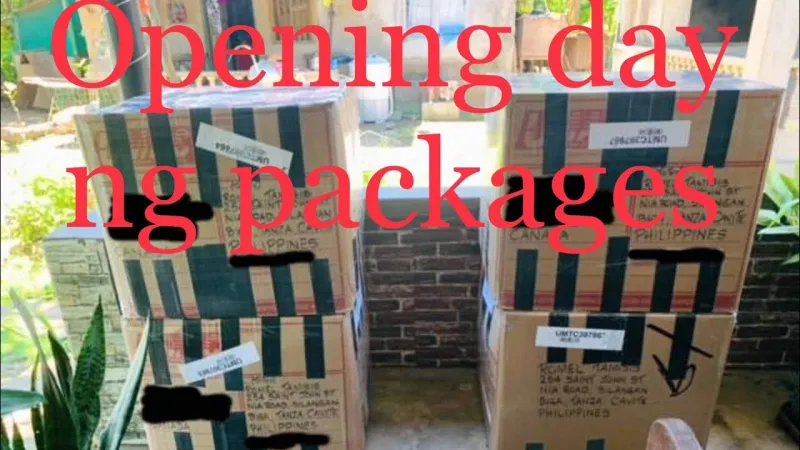
Photo: balikbayan box family opening package Philippines, via i.ytimg.com
Ask an American creator what they do with their earnings and you'll usually get a personal answer. A car payment. A move to a bigger apartment. Maybe a savings account with a vaguely aspirational name.
Ask a Filipina creator the same question, and the answer often starts with someone else's name.
"The first thing that leaves my account every month is my mom's medication," says Aling*, a 27-year-old creator outside Quezon City who's been streaming for three years. "Then my younger brother's allowance. Then my aunt, because she watched my kids when I was on shift. Whatever's left — that's mine. Sometimes that's a very small whatever."
If that sounds unusual by US standards, it shouldn't, at least not if you want to understand the Pinay content economy. Because behind the pricing, the tipping goals, the late-night streams timed to American insomniacs, there's a cultural operating system most Western fans have never heard of.
Utang na Loob: The Debt That Isn't Money
There's a Filipino concept called utang na loob, literally a "debt of the inner self." It's not a loan. Nobody invoices you for it. It's the idea that when someone sacrifices for you — a parent who skipped meals so you could finish school, an aunt who took you in — you carry a gratitude obligation that never fully expires.
Western cultures tend to treat adulthood as a clean break: you move out, you become your own unit, family support flows one direction and then stops. Filipino family culture works more like a circulating system. Money, childcare, housing — it all moves in loops across generations and between siblings, cousins, titas and lolos. When one node of the family starts earning dollars, the whole network feels it.
And creators earning from American fans? They're earning dollars. In the Philippine economy, that makes them the richest node in the room almost immediately.
Why a $20 Tip Is a Bigger Deal Than You Think
We've covered the exchange rate math on this site before — twenty dollars can go shockingly far in Manila. But the family layer changes the picture again, because that money rarely has just one destination.
"Fans assume I'm rich because I make more than a nurse here," laughs Mara, 31, who streams most weeknights. "What they don't calculate is that my income supports nine people. Nine. My rate has to cover my life AND theirs. That's why I don't drop my prices when times are slow. I can't. My price isn't about me being greedy — it's about my niece's school enrollment deadline."
This is the piece Western fans frequently miss when they grumble about rates or push for discounts. In the American indie creator model, pricing is framed as personal: your time, your labor, your boundaries. In the Filipino model, pricing is often a family budget line item. A creator lowballing herself isn't just shortchanging herself — she's shortchanging a household, sometimes several.
The Balikbayan Box Mentality
To understand the psychology, look at the balikbayan box. For decades, Overseas Filipino Workers have shipped these cardboard boxes home — clothes, chocolates, shampoo, spam — packed with an almost competitive generosity. The box isn't a gift exactly. It's a duty, a love language, and a status marker all at once. Families photograph themselves opening them. Empty balikbayan boxes get reused for years.
Digital earnings have become the modern balikbayan box. Instead of shipping goods, creators send GCash transfers, pay tuition portals directly, cover hospital bills over the phone at 2 AM after a US stream ends. The instinct is identical: when you have access to outside money, sharing it isn't optional generosity. It's who you are.
"My grandmother raised me," says one creator who asked to keep her stage name off the record. "There is no version of my life where I make American money and she doesn't get hers. That's not a sacrifice. That's just the order of things."
How It Changes the Fan Relationship
Here's where it gets interesting for the audience: this family economics actually reshapes how creators treat fans.
Several creators told us they think of regulars almost as patrons in an old-fashioned sense — people whose contributions ripple outward into real lives. One keeps a mental list: this tip covered a semester of books, that one fixed the roof after a typhoon. "When a guy from Ohio tips me, I sometimes literally tell my mom, 'That's the roof money,'" she says. "He doesn't know that. But I do. It makes me loyal to him."
That loyalty cuts both ways. Creators describe feeling pressure to always be available, always gracious, because regulars are the stable revenue the family depends on. Burnout is common and rarely discussed, because complaining about the income source feels like ingratitude — and utang na loob cuts against complaining about anything you've been given.
There's also a darker edge. Family obligation can slide into family extraction, with relatives treating a creator's earnings as a communal pot with no limits. Creators we spoke with are increasingly setting boundaries — a word that's entering the Filipino creator vocabulary fast — deciding what percentage goes home and what stays theirs.
What Fans Should Take From This
Nobody's asking you to feel sorry for anyone. The creators we talked to are sharp businesspeople who chose this work and mostly like it. But if you're an American fan wondering why prices are what they are, why a creator seems to hustle harder than seems reasonable, or why she lights up when you tip during a typhoon season — now you know.
You're not just paying for a stream. You're plugging into one of the most durable family support systems on earth, one cardboard box and one GCash transfer at a time.
That's worth knowing before you haggle over five dollars.
Names and identifying details changed at creators' request.